While head-to-head or Rotisserie leagues are still more common, points leagues are growing in popularity in fantasy baseball. In these leagues, counting MLB player stats are awarded positive (or negative) points and compiled by each team, with teams either earning weekly wins or wining by having the most points by the end of the season.
Points leagues are different because they don't directly take into account percentage stats such as on-base percentage, batting average, ERA or WHIP. Those stats show up in other forms, but points leagues are largely volume games, where the biggest and best production wins out. That can drastically change how managers use RotoWire's fantasy baseball draft kit and go after certain players on draft day and the waiver wire.
What Exactly is a Points League in Fantasy Baseball?
A points league in fantasy baseball assigns specific point totals to player stats, including home runs, strikeouts, RBI and stolen bases. Similar to the most common format in fantasy football, every outcome equals a specific point total that gets compiled into a team's daily, weekly or season-long total. The team with the most points at the end of the week or season wins.
Leagues can customize which stats earn which points, so it's important that managers understand exactly what their settings are before diving into RotoWire's fantasy baseball mock draft or other draft prep work. It simplifies things from an outcome standpoint (one team's point total will be higher than another's), but the preparation and strategy can
While head-to-head or Rotisserie leagues are still more common, points leagues are growing in popularity in fantasy baseball. In these leagues, counting MLB player stats are awarded positive (or negative) points and compiled by each team, with teams either earning weekly wins or wining by having the most points by the end of the season.
Points leagues are different because they don't directly take into account percentage stats such as on-base percentage, batting average, ERA or WHIP. Those stats show up in other forms, but points leagues are largely volume games, where the biggest and best production wins out. That can drastically change how managers use RotoWire's fantasy baseball draft kit and go after certain players on draft day and the waiver wire.
What Exactly is a Points League in Fantasy Baseball?
A points league in fantasy baseball assigns specific point totals to player stats, including home runs, strikeouts, RBI and stolen bases. Similar to the most common format in fantasy football, every outcome equals a specific point total that gets compiled into a team's daily, weekly or season-long total. The team with the most points at the end of the week or season wins.
Leagues can customize which stats earn which points, so it's important that managers understand exactly what their settings are before diving into RotoWire's fantasy baseball mock draft or other draft prep work. It simplifies things from an outcome standpoint (one team's point total will be higher than another's), but the preparation and strategy can also be more difficult.
How Hitting Statistics Are Scored As Fantasy Points
The most common points league categories are hits, runs, home runs, RBI and stolen bases. Some leagues will add negative points for strikeouts or caught stealing, while others get more intricate and award bonus points for doubles and triples (so that it's worth more than just a single, just like in real-world baseball).
This clearly rewards plate appearances and volume while not hurting players who struggle with efficiency. In standard points rankings, Rays third baseman Junior Caminero is ranked 40th with his projected 31 homers, 95 RBIs, and 81 runs. In Rotisserie rankings, Caminero and his projected .314 on-base percentage is ranked 51st, a one-round difference. There are numerous examples of players who hit for volume and play every day, but aren't as efficient, and you'll want to target them early and often.
How Pitching Statistics Are Scored in Points Leagues
The most common points league categories for pitchers are innings pitched, strikeouts, wins, saves and earned runs (negative points). Certain leagues will add negative points for walks or losses, while other leagues add holds and quality starts. More nuanced leagues may even add bonus points for complete games or shutouts.
The standard scoring settings favor workhorses who log heavy innings. Because walks aren't penalized, this can change fantasy baseball rankings for managers. Consider Jays starter Dylan Cease, who is ranked 28th points rankings, but 58th in Rotisserie rankings because of his command struggles (which hurts his WHIP). Volume is rewarded over efficiency, so keep an eye out for that, depending on league settings, when finding your pitchers on draft day and the waiver wire. Be sure to check the RotoWire experts strategy recommendations before making moves.
Ways Scoring Systems Vary Across Fantasy Platforms
There are thousands of different combinations for fantasy baseball commissioners to tweak in points leagues. Each platform has its own "standard" that managers will want to take a look at, but note that most leagues will tweak those settings.
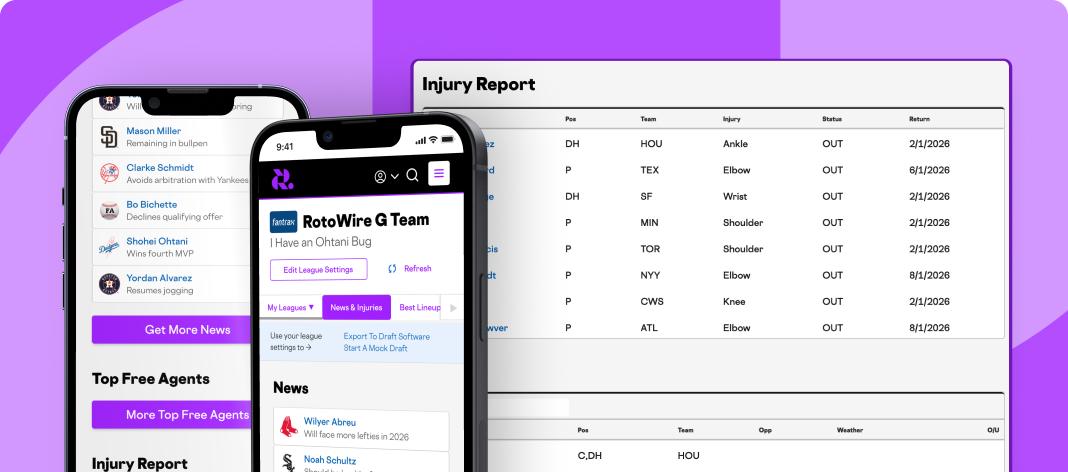
Using RotoWire's custom settings to rank players means you'll have the best and most accurate MLB projections to draft your team and improve it throughout the season.
How Points Scoring Shapes Fantasy Baseball Leagues
Points leagues require a different strategy necessary to compete. Similar players will be ranked near the top (think Shohei Ohtani, Aaron Judge, Bobby Witt and Paul Skenes), but the nuances of volume over efficiency in many regards change rankings. You can use that to your advantage on draft day and in trades.
Once you subscribe to RotoWire, look at the RotoWire expert's MLB projections throughout the year and then see how those projections relate to your specific settings. You may be able to steal a few players or make more lopsided trades because other owners are looking at generic rankings and projections, while you have the custom tools made specifically for your league.